A 29 year bicycle commuter wants you to join him

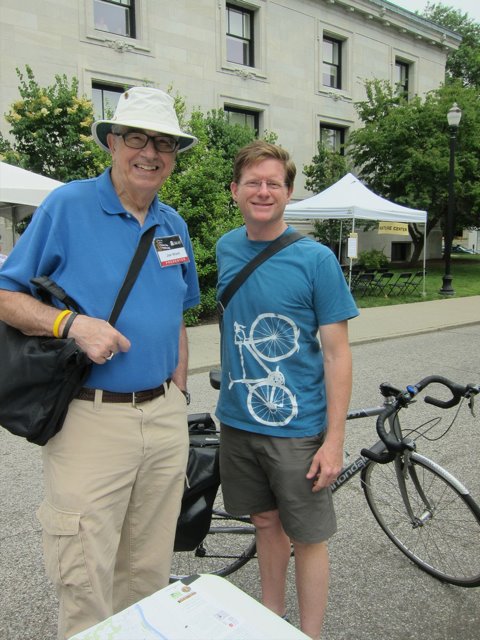
Joe Ward and Scott Render

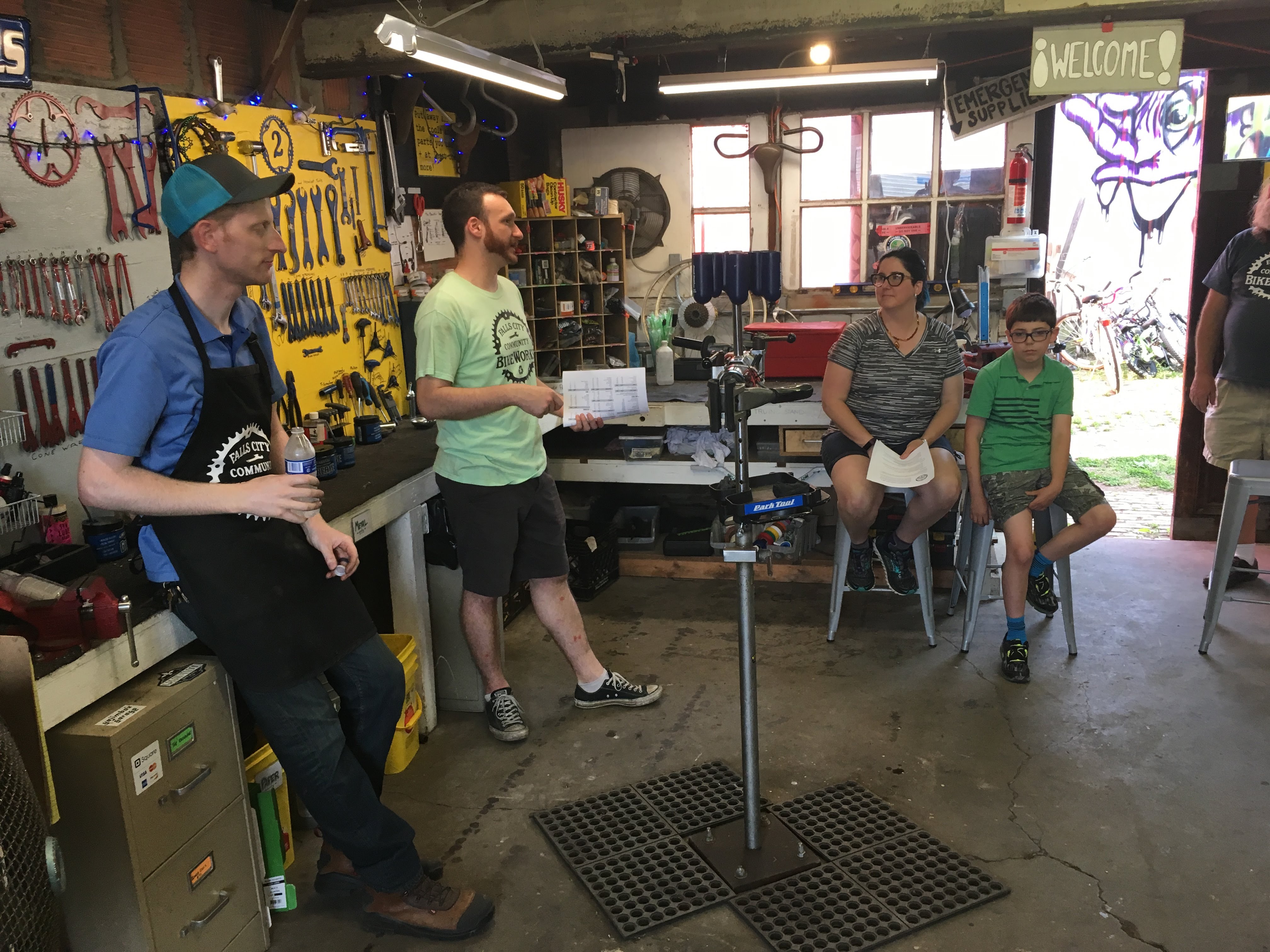
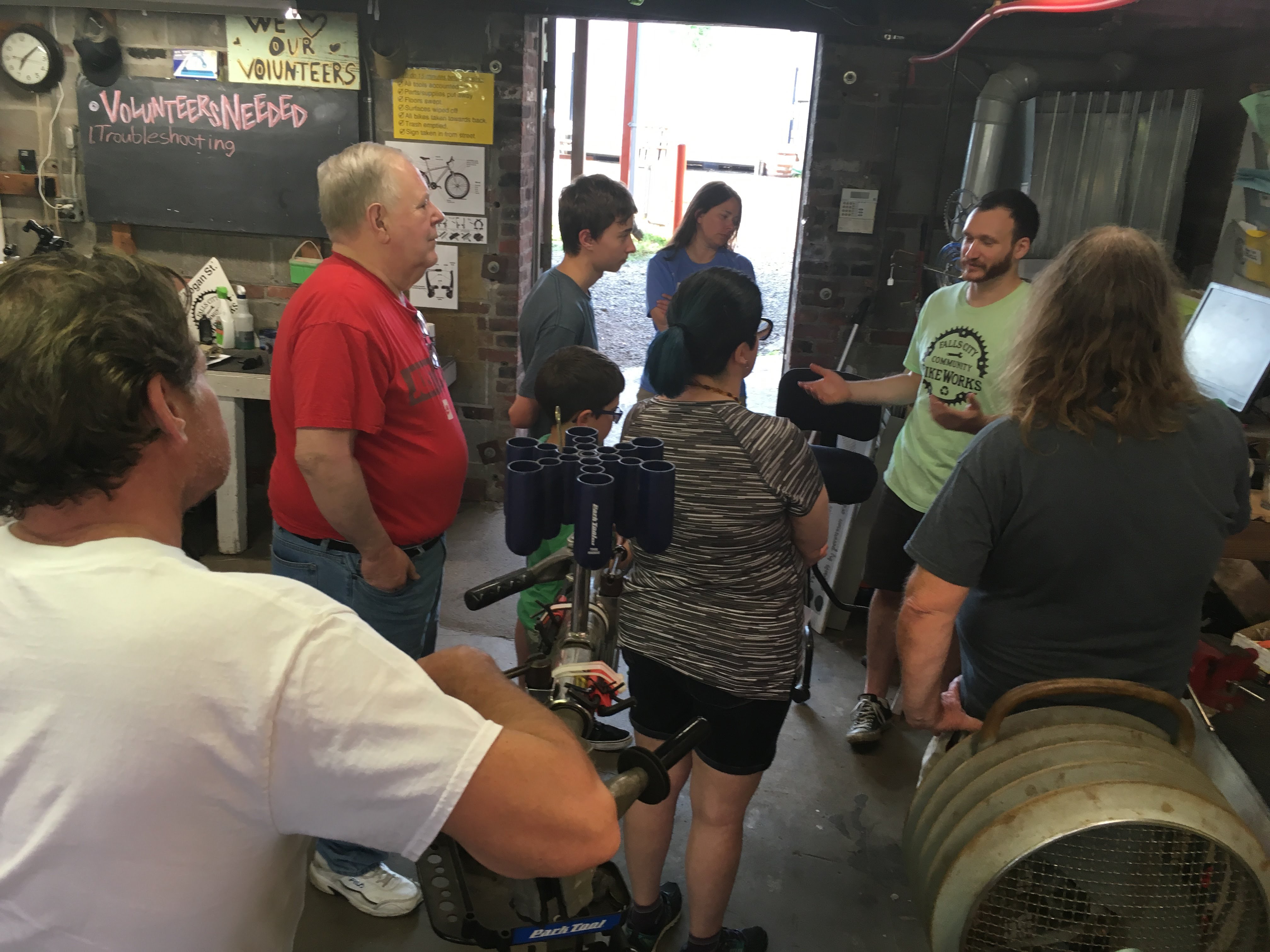
Courier Journal writer and long time bike commuter Joe Ward (The taller gentleman) and Scott Render. Joe was a legend in Louisville for his cycling experience and bike touring books. He inspired many of us to ride for transportation. Sadly, Joe passed away in September of 2013.

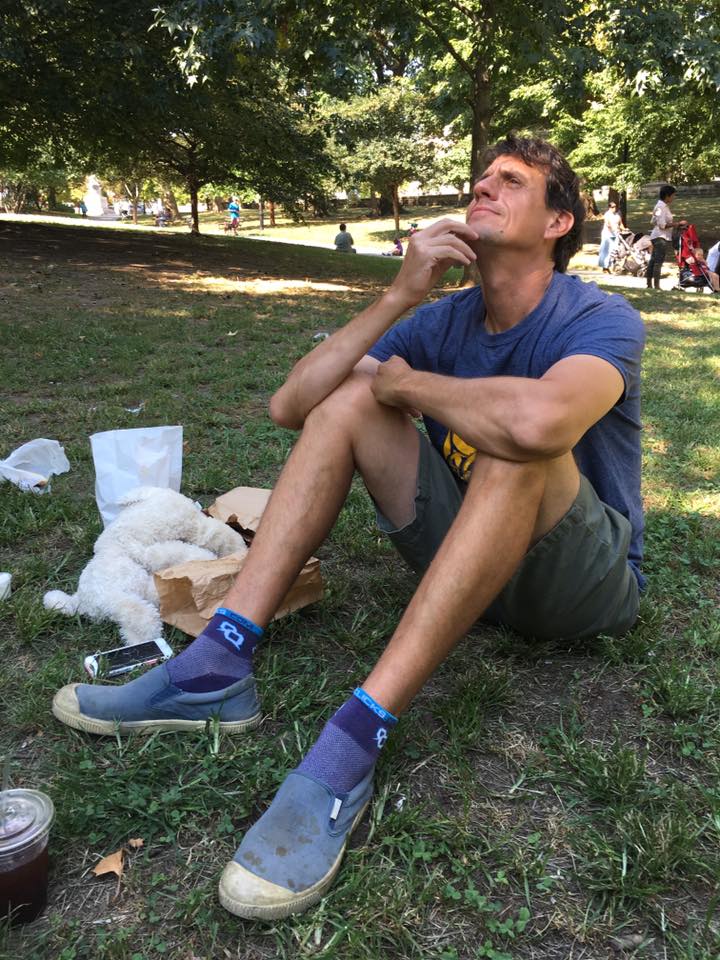
Hello there.  I’m Scott Render (Pictured over there in the bicycle t-shirt.) I joined the board at FCCB this year and I’m lovin’ it!

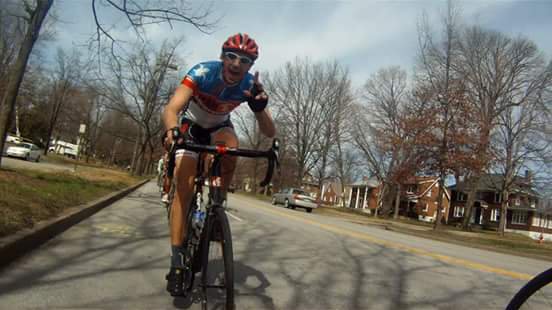
Back around 1989, I was working as a new writer at WHAS Radio in downtown Louisville. At the time they wanted to charge me $50 a month to park my car. I was barely making $50 a week. Then I read an article by Joe Ward at the Courier-Journal.  At the time, Joe had been bicycle commuting for many years, having started in the early 1970s. His article about his experiences bike commuting drew a stark contrast between driving the car and taking the more adventurous bicycle.  Smelling flowers in the spring. Seeing and hearing things you never do in a closed up car. Staying in shape. Not polluting. Having an adventure twice a day, going and coming. I was inspired. The next day I got my bike out and gave it a try, riding the short distance from Butchertown to Chestnut and 6th. I was able to park my bike right next to my desk in my office.  No one said a thing. I remember thinking I’m getting away with something here!  This was too easy.  And it felt great. That was 29 years ago, and except for a 4 year stretch working in Frankfort, I’ve been riding to work pretty consistently ever since, both in Louisville and Seattle where I lived in the 90’s for a few years. I can’t tell you how much money I’ve saved, how much more I’ve experienced, and how many cool people I’ve met along the way.

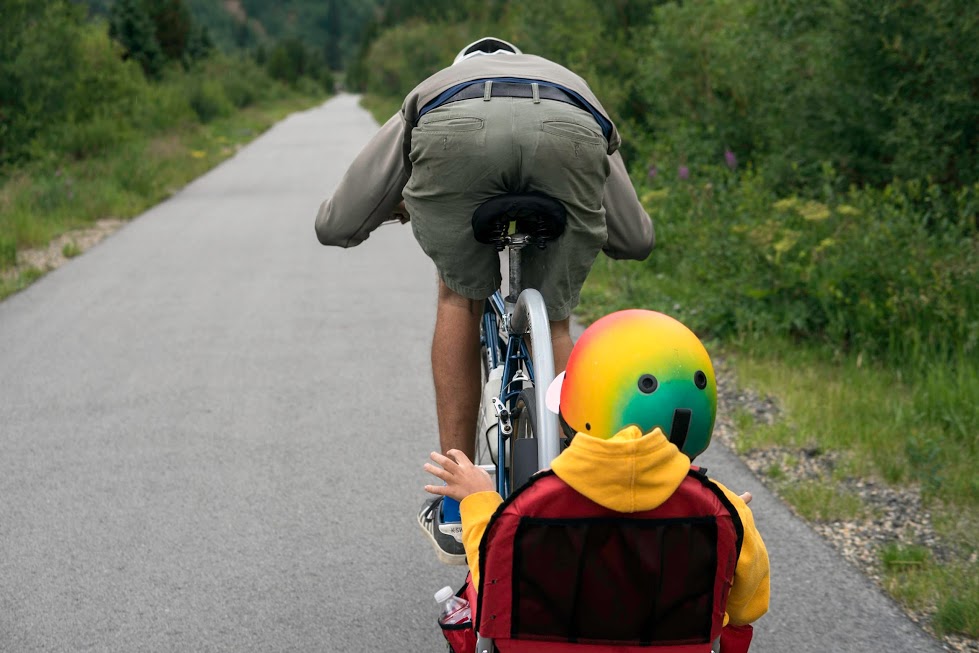
Riding to work today in Louisville, I’m likely to see a lot more folks out there joining me on any given morning. The city has a much more developed bicycle infrastructure now. It’s not perfect. It never will be. It certainly wasn’t when I started, or when Joe started. If you’re waiting for Louisville to be 100% safe and perfect to start riding for transportation, you’re riding down the wrong path. Just join us. Reach out to someone you know (someone at FCCB) and ask how you can start commuting. Reach out to me. It takes some time to get used to. Finding the right bike, the right clothing, the right gear, the best routes. But it’s all worth it. Bicycle commuting has changed my life in so many ways. I hope it can do the same for you.

For me it all started with a short article by Joe Ward. Thanks Joe for inspiring me to start commuting. Hopefully I can do the same for someone else. We really miss you!

Scott Render


LBC New Rider Clinics 2018

If you are new to bicycling and would like to sharpen your riding skills and learn the rules of the road, check out Louisville Bicycle Club’s 2018 New Rider Clinics.  These classes are offered for FREE to the public, and consist of a series of 5 classes for beginner riders, covering essentials like:

  • Bike fit and equipment safety check, helmet check
  • Gears and Shifting technique, lane positioning
  • Riding safely in groups
  • Basic repairs, flat fixing
  • Nutrition and hydration

Riders who complete the 5-class clinic series earn a free bike jersey too!

Check out full details and dates for the LBC New Rider Clinic sessions over at the LBC page.

FCCB Greeter Training – thanks for coming!

On Monday, May 14 we hosted seven Greeter Trainees at our Logan St shop for a 90 minute training on how to run FCCB Open Shop hours.  FCCB Greeters are essential volunteers that:

  • welcome guests
  • give shop tours
  • sign up new members
  • help patrons purchase parts and bikes
  • direct repair questions to Mechanic volunteers

Come meet our new Greeters at an Open Shop session soon!

Weekly Open Shop hours:

  • Sundays 1:00 pm-4:00 pm
  • Wednesdays 6:30pm-9:30 pm

More volunteers are welcome at FCCB!  Please sign up for a volunteer shift on our Volunteer page!

FCCB Welcomes Executive Director Bill Carey

Over the winter of 2017-2018, the FCCB Board of Directors decided to increase our scope of operations by adding to the team an Executive Director.

This position will serve FCCB by expanding efforts in community engagement, fundraising, and communications.  We look forward to an exciting summer of 2018 and beyond with our new E.D. Bill Carey!

Bill was born and raised in Charlottesville, Virginia. After stints in Richmond, Boston, Nashville, and Chicago, he moved to NYC to pursue a career in music. During his time in New York, he worked as a bicycle messenger and a mechanic. He began racing, primarily crits and track races. It was while working in administration at Rockefeller University on the Upper East Side that Bill became actively involved in the cycling advocacy community that was gaining momentum in NYC. It was on these daily rides across the Manhattan Bridge as a commuter, in a billion conversations with other daily commuters, that his lifelong love affair with the bicycle became something that he knew he wanted to spend his life in some capacity helping others to experience the same joy and freedom he experienced by being fully in control of his way of getting around.

Fast forward to 2018, Bill is now a father and Louisville resident and is thrilled to have an opportunity to make a positive impact on the Louisville cycling community as the Executive Director at Falls City Community BikeWorks.

Bike Sale, Sunday, March 11

Join us this Sunday from 11 a.m. to 5 p.m. for the big Falls City Community BikeWorks Bike Sale!

FCCB has an overstock of refurbished bikes ready for spring!

We’ll be bringing bikes out of storage for test rides in our parking lot and nearby streets. These bikes were all donations that were lovingly restored by our volunteers and mechanics.

Prices range from $25-400, with most adult bikes between $75-125. Kids bikes $25-100.

FCCB accepts cash or credit card.

Volunteer to help out at the Bike Sale event: http://www.signupgenius.com/go/30e0545ada62ba0f58-oneday

Bike sale proceeds allow us to fulfill our mission of providing bicycles as low-cost transportation for those in need, and sharing our knowledge about bike repair and maintenance in a safe and welcoming shop environment. We are a 501c3 non-profit organization.

GreaseRag, March/April edition, is here!

March2017Newsletter

There’s SO SO MUCH going on as we become our very own independent 501c3 nonprofit, grow our Board and volunteer base, and get ready to turn 3 years old! 
Many chances to volunteer, learn, and bike.
Many community and in-house events and workshops.
Many people to thank for their service and leadership.
Many new faces to greet.

JUMP IN! 


January Bike Fix-em-up

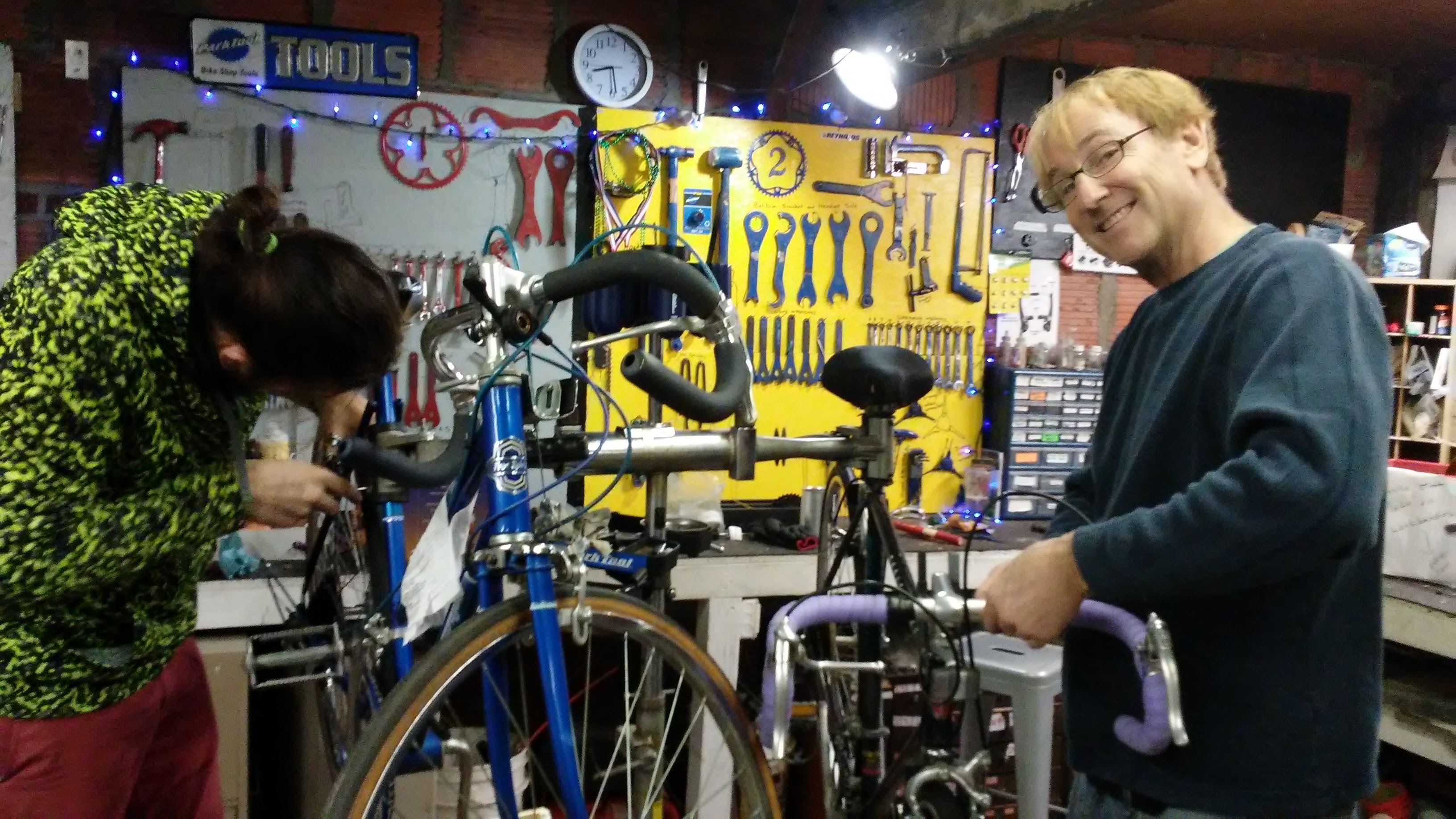
Tom and Graham hard at work

Tom and Mark hard at work!

On Monday night, January 23, 2017 FCCB volunteers had a Bike Fix ‘Em Up Night to double our inventory of complete bikes ready-to-ride for Spring 2017!  Twelve volunteers worked in small groups to take inventory of project bikes, make necessary repairs, and clean and polish bikes after a safety-check and test-ride. Our soundtrack for the evening was The Beatles, and then some 1970’s Classic Rock.

Some highlights:

  • Mark Humke fixed up a nice 1980’s Schwinn road bike in gloss black with matching lavender bartape and saddle.
  • Tom Hughes tuned and cleaned an electric blue Free Spirit roadie suitable for a rider around 5’5”.  A typical tuneup includes gear and brake adjustment, wheel truing, hub adjustment, headset adjustment, and more. FCCB’s experienced bike mechanics can tune-up a bike in good condition in about an hour.
  • Graham worked on a full-fendered pearl-white beach cruiser with a front basket.  This one is ready-to-ride and priced cheap at $60!
  • Samantha Rivera and Ben Goldenberg offered maintenance expertise and shop guidance to the assembled volunteers.
  • Mike Hernandez sorted bikes in the showroom and helped pile up the bent and broken frames that now comprise Scrap Mountain.
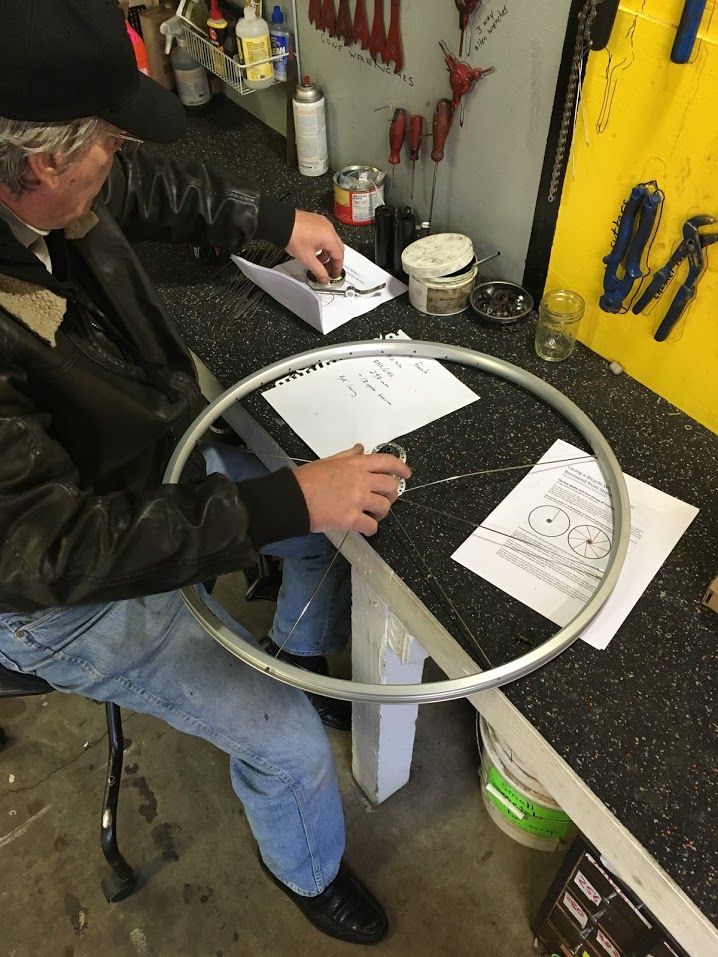
  • Bernie Leeds rebuilt the hubs in a single-speed wheelset and fitted them to the gloss-black Hounder frame he donated to FCCB last fall. Thanks, Bernie!
  • Nathan S. and Alan re-cabled a nice modern Schwinn MTB suitable for urban riding as well as light offroad use. If you are tired of fixing pinch flats on your “skinny tire” bike, then consider a fat smooth tire that keeps pressure for weeks.
  • Nick Lough cleaned and polished all the tuned-up bikes and prepped them for the showroom.  Nick also helped with the reorganization of the showroom.
  • Jane and Nate inspected a lot of old clunker frames from showroom and piled up the broken ones on Scrap Mountain.

General commentary from Nate Pinney, shop mechanic, on what makes a donated bike eligible for rebuilding, or destined for Scrap Mountain:

  • Bikes that have bends, large dents, or cracks in the frame or fork are generally not suitable for rebuilding.  Sometimes bent forks can be replaced (forks get bent in a crash), but often frames involved in crashes are damaged in other, more subtle ways. Crash damage typically manifests itself as a bent-in front fork, and often a kinked downtube, just behind the head tube.  FCCB does not resell donated frames or bikes if we detect any evidence of crash damage (these frames are stripped of useful parts then scrapped or turned into artistic re-use projects).
  • Suspension frames and forks (“shocks”) with worn bushings are a pain to rebuild, because replacement bushings and other parts are rare and difficult to install. The modern variety of sub-$200 full-suspension bikes from big-box stores (lookin’ at you, Walmart and Target) are often not economical to repair when suspension components begin to fail. A typical fate for a damaged or incomplete full-suspension frame is the ritual removal of useful parts (brake calipers, seatpost, crank, etc.) and ceremonial placement of the bare frame atop Scrap Mountain.
  • Frames with severely bent or missing rear derailleur hangers can be troublesome for community bike shops. Many modern bikes are made with replaceable derailleur hangers, which are a good idea in theory. Replaceable derailleur hangers are made of soft aluminum, and are designed to bend or break easily in a crash. This failure mode allows the hanger to absorb the energy of a crash impact and prevents further damage to the derailleur and frame. However, different manufacturers use slightly different shapes for their derailleur hangers, and they also change designs over time. The result is a bewildering array of different derailleur hangers that are not cross-compatible. It is possible to buy replacements for a given bike model, but they can be expensive, especially for older or rare bikes. Keeping a running inventory of derailleur hangers suitable for whatever random bikes come into our door is not a feasible task for our humble community bike shop. If you bring a bike or frame to our shop as a donation, please do not remove the derailleur hanger!  It is part of the bike frame, not part of the derailleur!

That said, FCCB is very thankful to our many donors and volunteers who have brought us a lot of really nice bikes. Most of the bikes that are donated to FCCB will be rebuilt and sold or re-donated to those in need of a working bike. Our goal is to get donated bikes back on the road in safe riding condition, and turn aspiring cyclists into active cyclists without the entry barrier of having to buy an expensive new bike.

— Nate Pinney, VP at FCCB and bike mechanic extraordinaire